
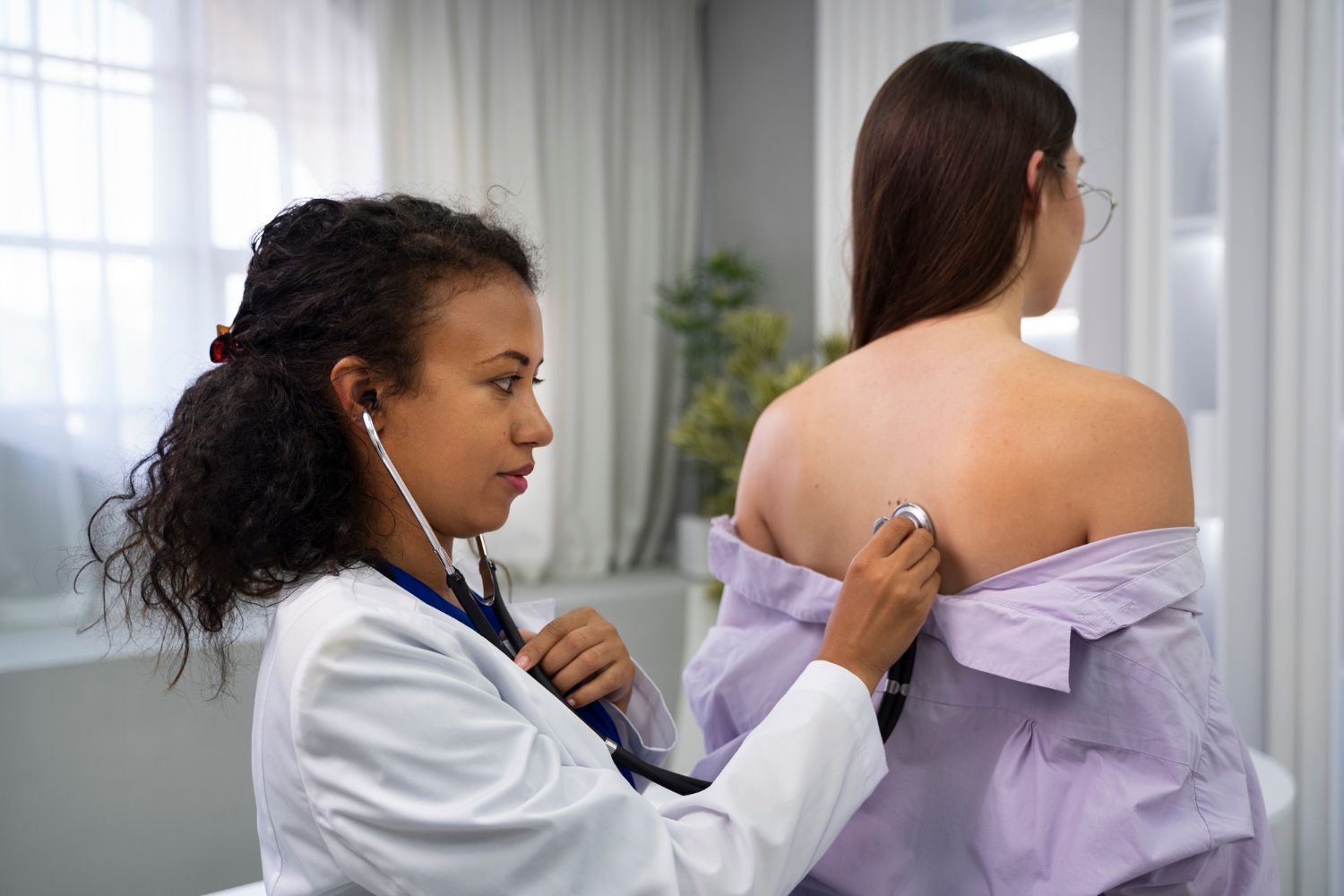
Five-Day Patient Assessment Skills Workshop: History Taking and Physical Examination Course
Course code: A03
Course summary
This face to face Five-Day Patient Assessment Skills Workshop is an intensive program designed to develop and enhance healthcare professionals' skills in patient assessment. This course is suitable for nurses, and allied health professionals involved in the initial assessment and management of patients. Participants will gain comprehensive knowledge and hands-on experience in evaluating patients effectively.
Accredited by CPD Standards Office (CPD SO), this workshop ensures that participants are learning the most up-to-date, evidence-based practices. The course integrates theoretical learning with practical application to ensure proficiency in clinical assessments. By the end of this workshop, healthcare professionals will be better equipped to conduct thorough and systematic patient evaluations, ultimately improving patient care outcomes.
Who should attend?
All registered nurses
Nurse practitioners
District nurses
Health visitors
Modern matrons
Community matrons
Allied health professionals such as pharmacists and paramedics
Physiotherapists
Occupational health nurses
Medical students
Important notes
Included:
All course material including a work place competency workbook, evaluations and certificate of attendance provided.
Morning and afternoon refreshments.
This face to face course runs from 10:00am- 5:00pm Monday-Thursday, per agreed test out appointment on Friday
Quality assurance: hands-on workshop; maximum student to trainer ratio: 12 to one.
CPD SO accreditation does not guarantee clinical competence. This must be developed in the workplace with appropriate clinical facilitators who can then look at areas that are specific to individual areas of practice.
Completion of this course does not qualify the attendee as an advanced practitioner but is the first step in expanding practice, leading to a more autonomous role.
In-house option: tailor-made patient assessment skills workshops. We can design a one-to-10-day programme with you, matching staff needs, patient requirements and available resources.
PLEASE NOTE: THE LONDON COLLEGE OF OSTEOPATHIC MEDICINE DOES NOT HAVE A LIFT AND REQUIRES CLIMBING A NUMBER OF STAIRS TO GET TO THE ROOM.
Cost
| Course duration | Course CPD | Full price (incl VAT) per person |
|---|---|---|
| 5 day(s) | 35 hour(s) | £775.00 |
Discounts
| Dates | Block size | Block discount |
|---|---|---|
| 09/11/2026 - 13/11/2026 | 4 | 10% |
| 01/03/2027 - 05/03/2027 | 4 | 10% |
| 14/06/2027 - 18/06/2027 | 4 | 10% |
Dates / venues
| Location - venue | Dates | No. of people |
|---|
Aims / objectives
Aims:
- To provide participants with the essential skills needed for accurate patient assessment.
- To enhance clinical decision-making capabilities through hands-on practice and real-world scenarios.
- To ensure participants can apply evidence-based techniques in patient evaluation.
Objectives:
By the end of the course, participants will be able to:
- Conduct thorough and systematic patient assessments.
- Interpret clinical findings accurately and efficiently.
- Utilise basic physical examination techniques in a systematic way.
- Enhance communication skills for effective patient interaction.
Course programme
Introduction to Patient Assessment:
- Importance of comprehensive assessment
- Basic principles and best practices
- Overview of the patient assessment process
History Taking and Clinical Interviewing:
- Effective communication techniques
- Gathering relevant patient history
- Structuring the clinical interview
Physical Examination Skills:
- Techniques for assessing different body systems
- Identifying normal vs. abnormal findings
Assessment of Body Systems: Systematic approach to physical exams
- Techniques for assessing different body systems
- Identifying normal vs. abnormal findings
Assessment of Body Systems:
- Integumentary System: Skin assessment basics, recognizing lesions, rashes, and other dermatological conditions.
- Respiratory System: Inspection, palpation, percussion, auscultation, recognizing breath sounds.
- Ear, Nose, and Throat (ENT) System: Examination of the ears, nasal passages, and throat. Head and neck lymphatics.
- Endocrine System: Assessment of thyroid function, recognizing signs of hormonal imbalances.
- Cardiovascular System: Inspection, palpation, auscultation, recognizing heart sounds.
- Gastrointestinal and Urinary System: Abdominal examination, identifying masses, liver and spleen palpation. Examination of the kidneys and bladder, recognizing abnormalities.
- Neurological System: Neurological examination techniques, assessing cranial nerves, motor and sensory function, reflexes.
- Eye Examination: Assessment of visual acuity, pupil reaction, eye movement, and detecting common eye conditions.
- Musculoskeletal System: Joint examination, assessing range of motion, identifying common musculoskeletal disorders.
Practical Sessions:
Practical sessions including:
- Hands-on practice
- Peer and instructor feedback on performance
Documentation and Reporting: accurate and effective documentation practices
Final Assessment and Certification:
- Lecturer demonstration of patient top to toe examination
- Comprehensive final exam- top to toe examination on a colleague.
- Practical assessment of skills feedback.
Certification of completion
Led by
TBA
Participant Voices!
FF- (Practice Nurse)
“Perfectly designed course, building from basic to complex knowledge with approachable, expert instructors.”
AC- (Urgent Care Practitioner)
“Every element was useful — a great opportunity to revisit key principles and reflect on practice.”
SO- (General Nurse)
“Highly relevant content that directly applies to my everyday work — fantastic course.”
PL- (Urgent Care Practitioner)
“Excellent workshop with supportive tutors; I would definitely recommend it to others.”
Frequently Asked Questions
Does the workshop teach a structured head-to-toe clinical examination or focus on individual systems separately?
It does both. The programme builds a systematic head-to-toe assessment framework while also providing detailed, system-by-system teaching across cardiovascular, respiratory, neurological, abdominal, musculoskeletal, endocrine, ENT, eye, and integumentary examinations.
Will I be assessed on my physical examination technique during the course?
Yes. The final assessment includes a full top-to-toe examination on a colleague, supported by lecturer observation, structured feedback, and evaluation of clinical technique and accuracy.
Does the course include training on distinguishing normal from abnormal findings across different body systems?
Yes. A key focus is developing clinical reasoning skills to differentiate normal physiological findings from pathology, with practical examples across multiple systems to support diagnostic confidence.
Is there practical, hands-on teaching for history taking, examination, and clinical documentation?
There is. The workshop includes supervised hands-on practice in history taking, clinical examination, and documentation, with real-time feedback from instructors to improve accuracy, structure, and clinical communication.